Posts
Most fertile persons in Southern Västerbotten and Northern Ångermanland
Fertility based on the database Kråken. The area that is covered is maily northern Ångermanland and southern Västerbotten so many fertile people from for example Skellefteå is missing. I know of at least one woman from Skellefteå with 21 children.
The woman with most children, Maria Lovisa Johansdotter,Spöland, had her 22 children Nils Petter Hurtig Olofsson, Vännfors, who had 23 children.
The male competition ends with a draw between Erik Nyberg Eriksson, Nyåker, and Mikael Mikaelsson, Armsjö with 29 children each, both with 2 partners.
Settlement of Forest Finns in Norrland
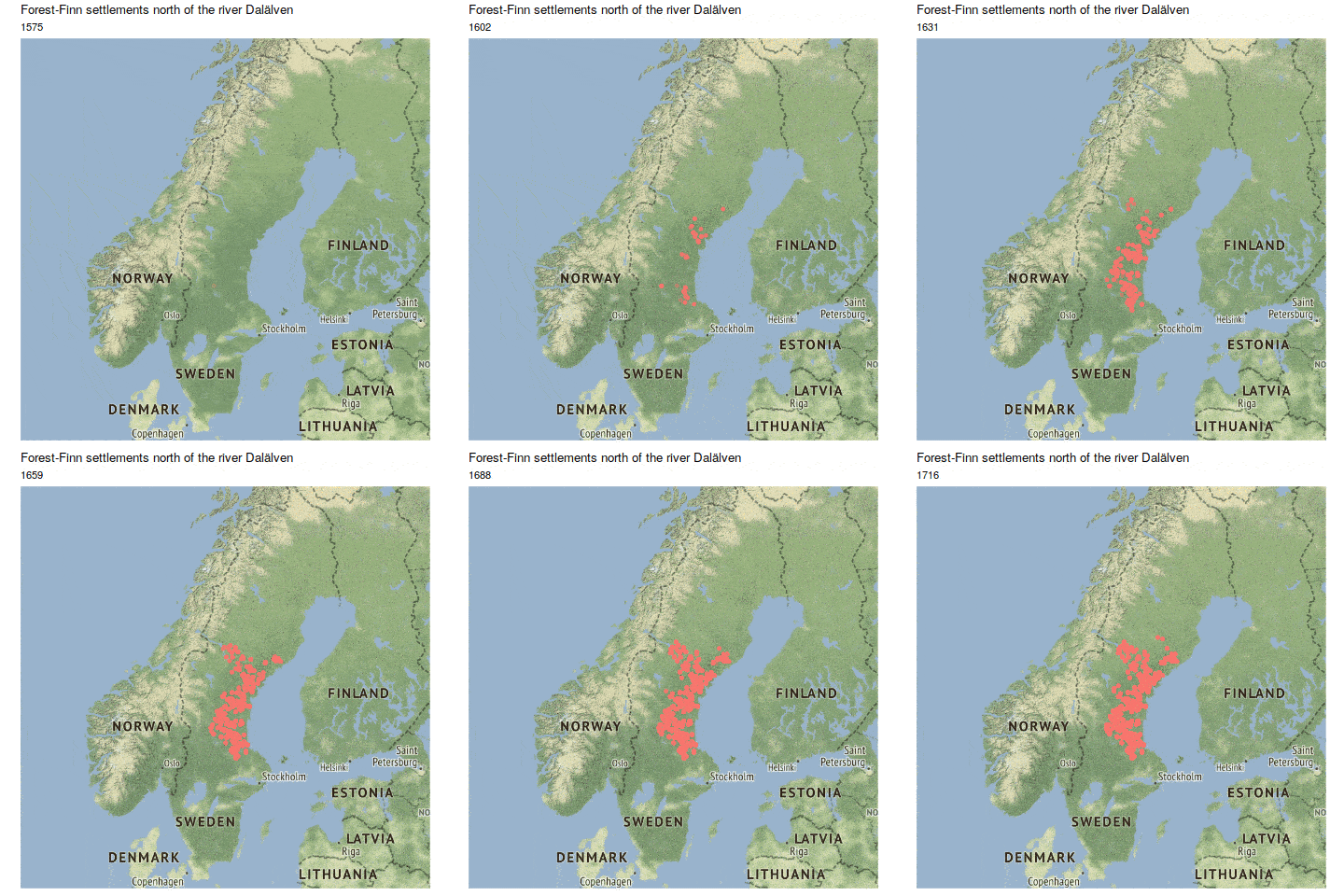
Well known are the settlements of Finns in Värmland but less known are the settlements in Norrland. So here comes a animated map of the settlements over time of Finns in Norrland. (Right klick and choose “view image” or “open image in new tab” to get it Zoomable). The area south of Dalälven is excluded. It makes the close DNA matches between people in this area and Finland more understandable.
Y-DNA
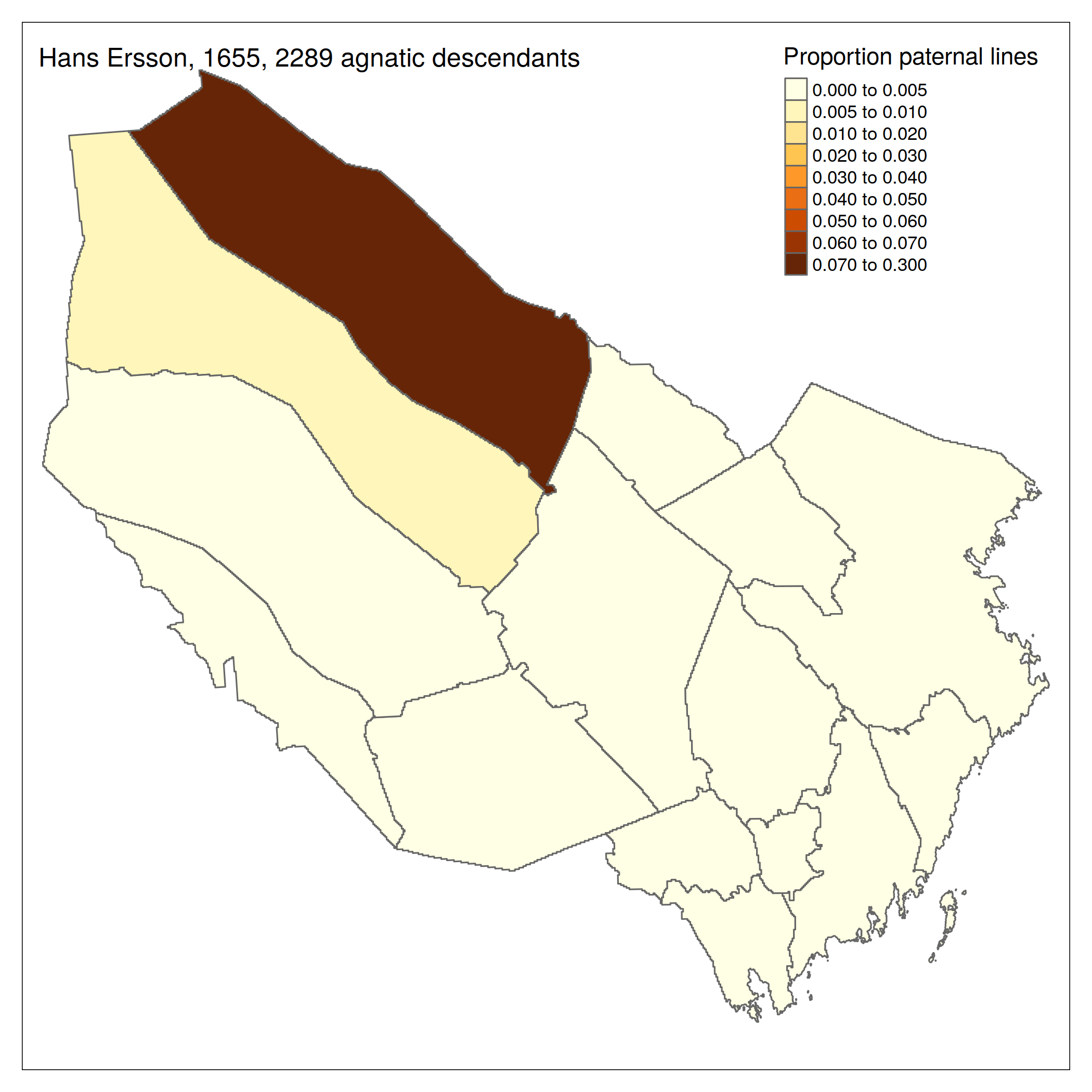
Hans Ersson, 1655, illustrates the impact an individual can have on the genetic make up of a region. 25% of those born 1890-1930 in Sorsele had a strait paternal line to him according to the database Kråken. Quite extrem!
To see if there were more extrem cases I made a histogram of the number of “founding fathers” and their number of descendents in the database with a strait paternal line to them.
Descendants to some settlers in Västerbotten
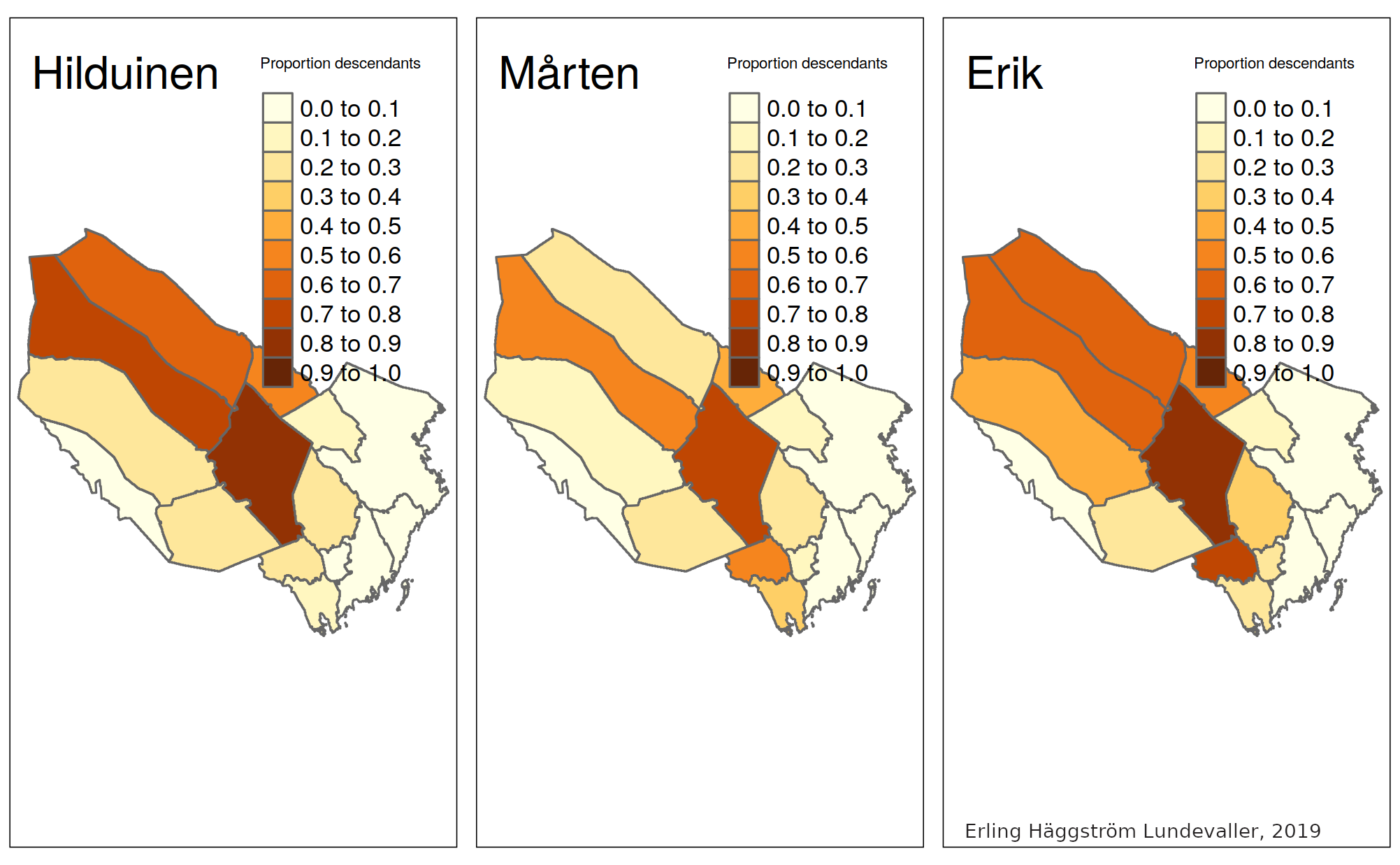
The maps illustrates the impact of the “Örträsk Finns” on the interior of Västerbotten by three maps showing how their descendants spread. It is based on the database Kråken which is not compleatly finished for all of Västerbotten but it can anyway give a rough picture of how they spread over the land. For illustration three of the founding fathers are used namely:
Johan Philipsson Hilduinen ca 1620-1697 Mårten Hindersson ca 1625-1697 Erik ca 1640 only known from his two sons Erik and Håkan The first map shows the proportion of the persons born 1890-1930 who descend from them.
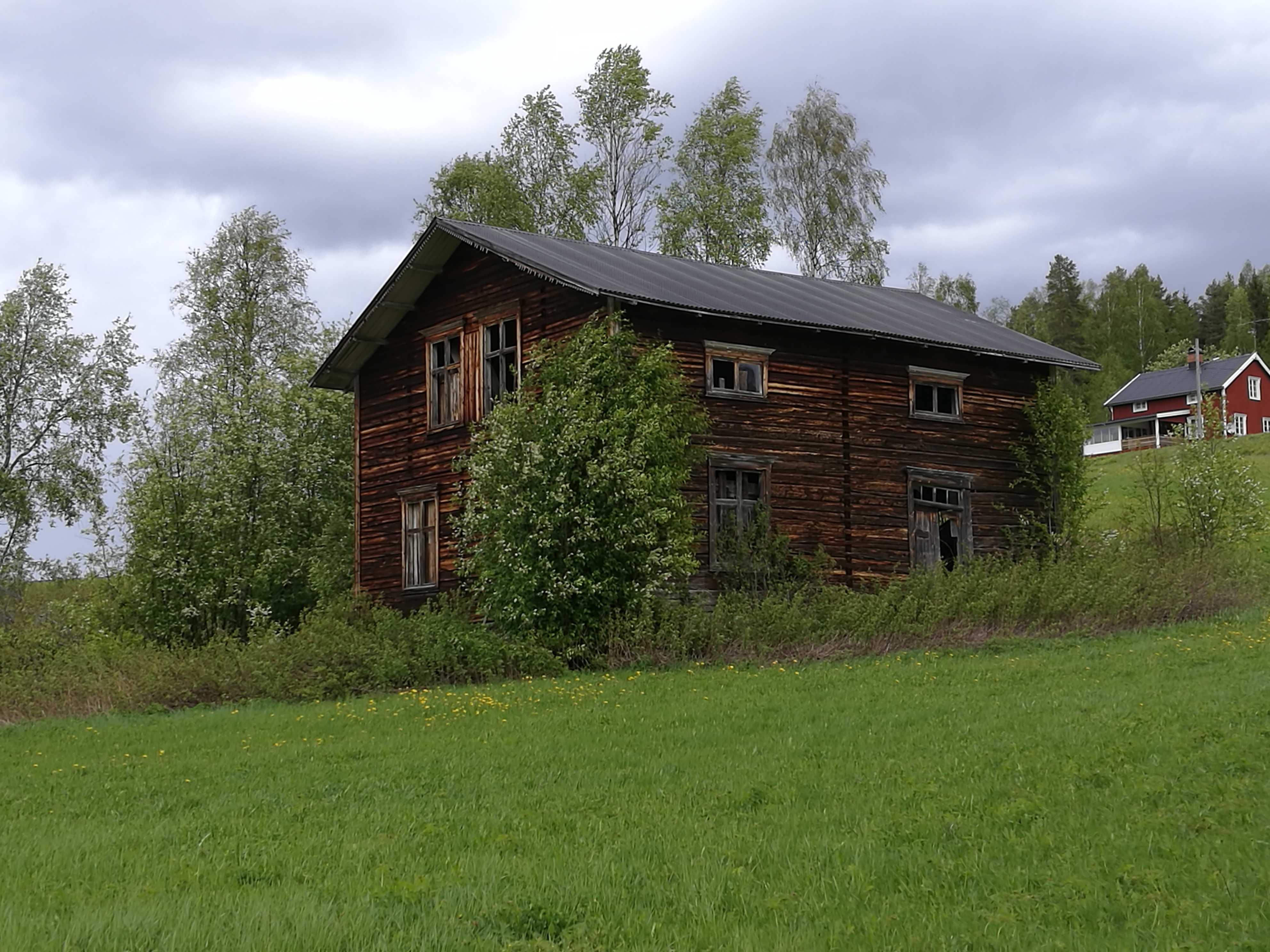
Håkans Farm
Visited again the old settlements of some of my forefathers.
The house on the picture is standing on the place where Erik Ersson (b. ca. 1669) helped his brother Håkan (b. ca. 1670) to start a farm in Örträsk in 1706. It has not been properly dated but might be from around 1750. (Green dot on the map at the bottom) The map below over Håkans farm is klickable for a large map over Örträsk from 1713.
Sursill-Arctophilacius + A DNA puzzle
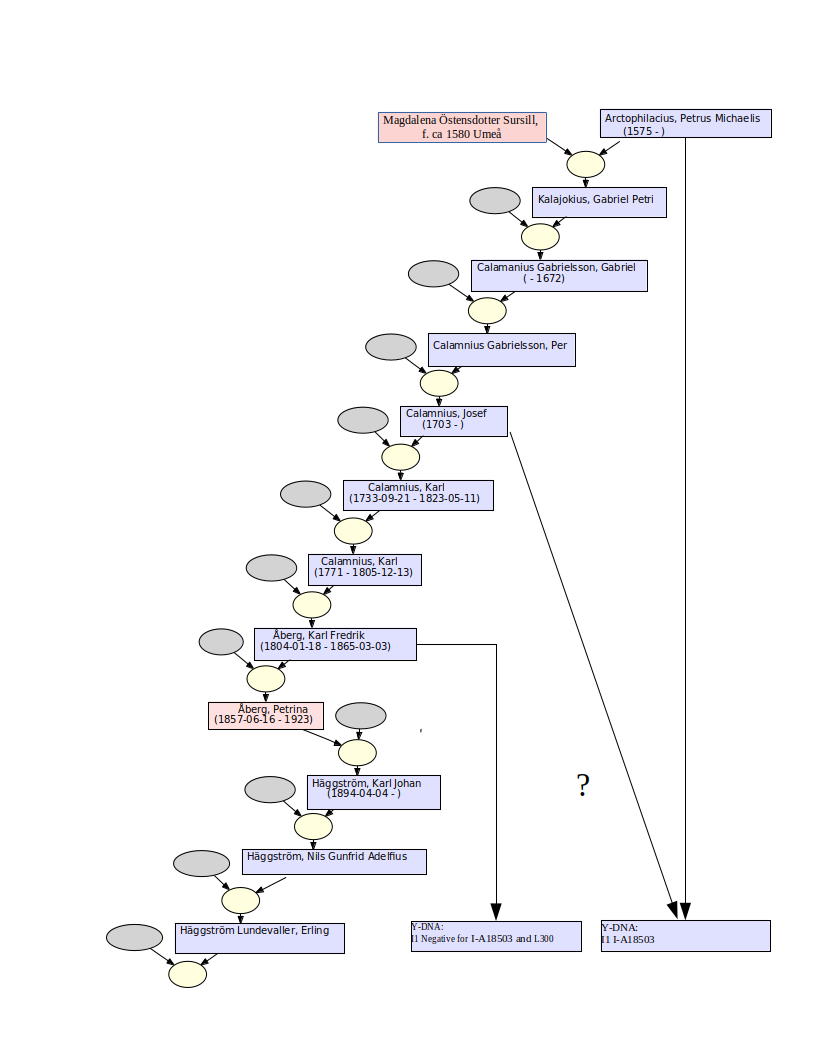
Arctophilacius This is my paper link back to the big Sursill, Arctophilacius and Calamnius family. The link is probably wrong as there are conflicting DNA tests of the paternal lines from Petrus Arctophilacius at present.
See more about this family at:
http://www.sursill.net/
http://www.calamnius.fi/
Arctophile Origin of name???? 🐻 😄 A person who is very fond of and is usually a collector of teddy bears.
Arctophile means just “bear loving, bear lover,” but in modern English specifically a lover of teddy bears, not grizzlies.
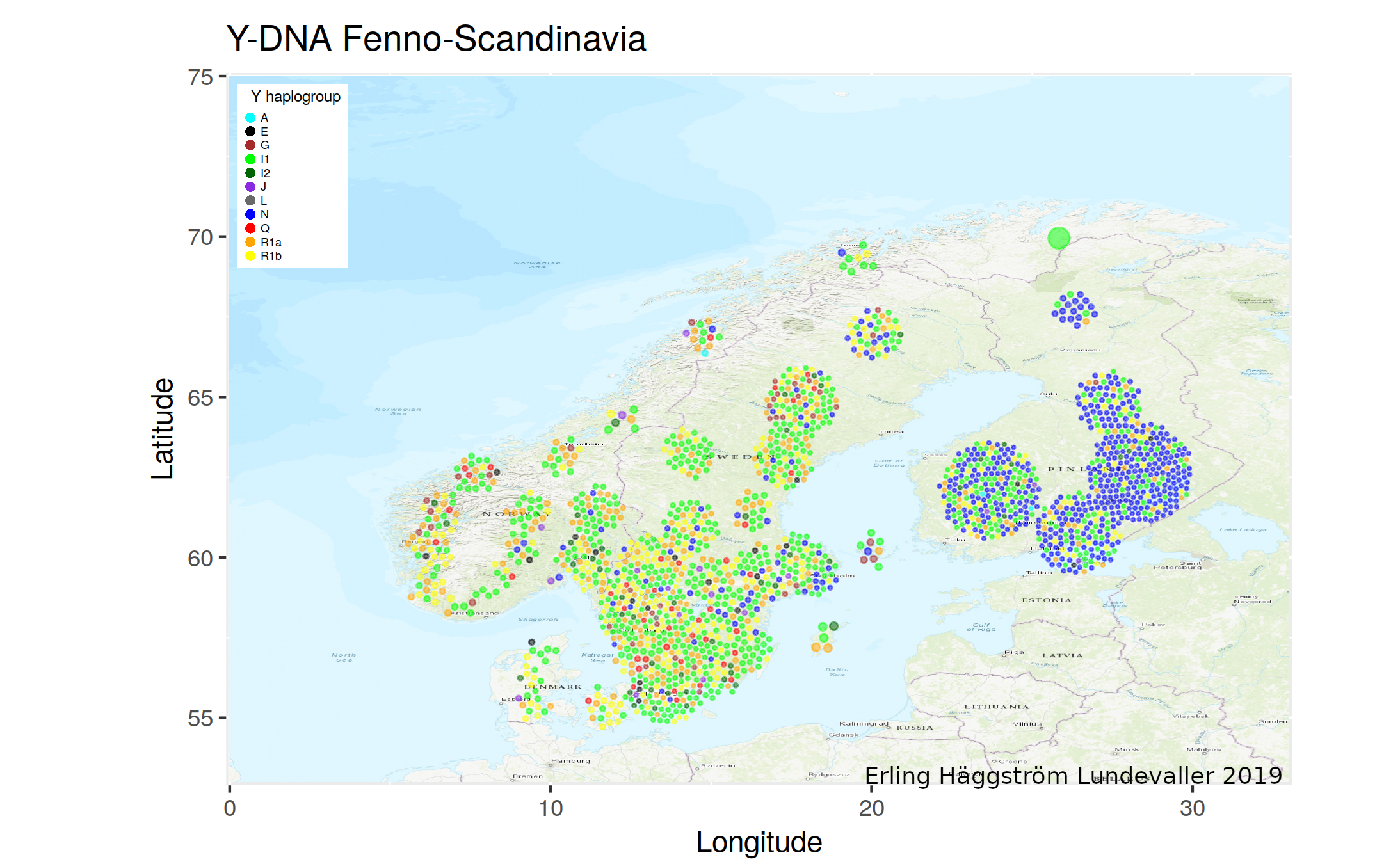
Y haplogroups in Finland and Scandinavia
I made a map of the YFull kits with province listed for the Scandinavian countries and Finland with the basic idear that one kit should be one point. Mainly as an experimental alternative to other maps for showing the geographical distributions of the haplogroups. To avoid over plotting each point searches for a free space to be plotted and can also adjust size to squese in. This causes the ball shapes in especially Finland as most points are located to province landmass centroides.
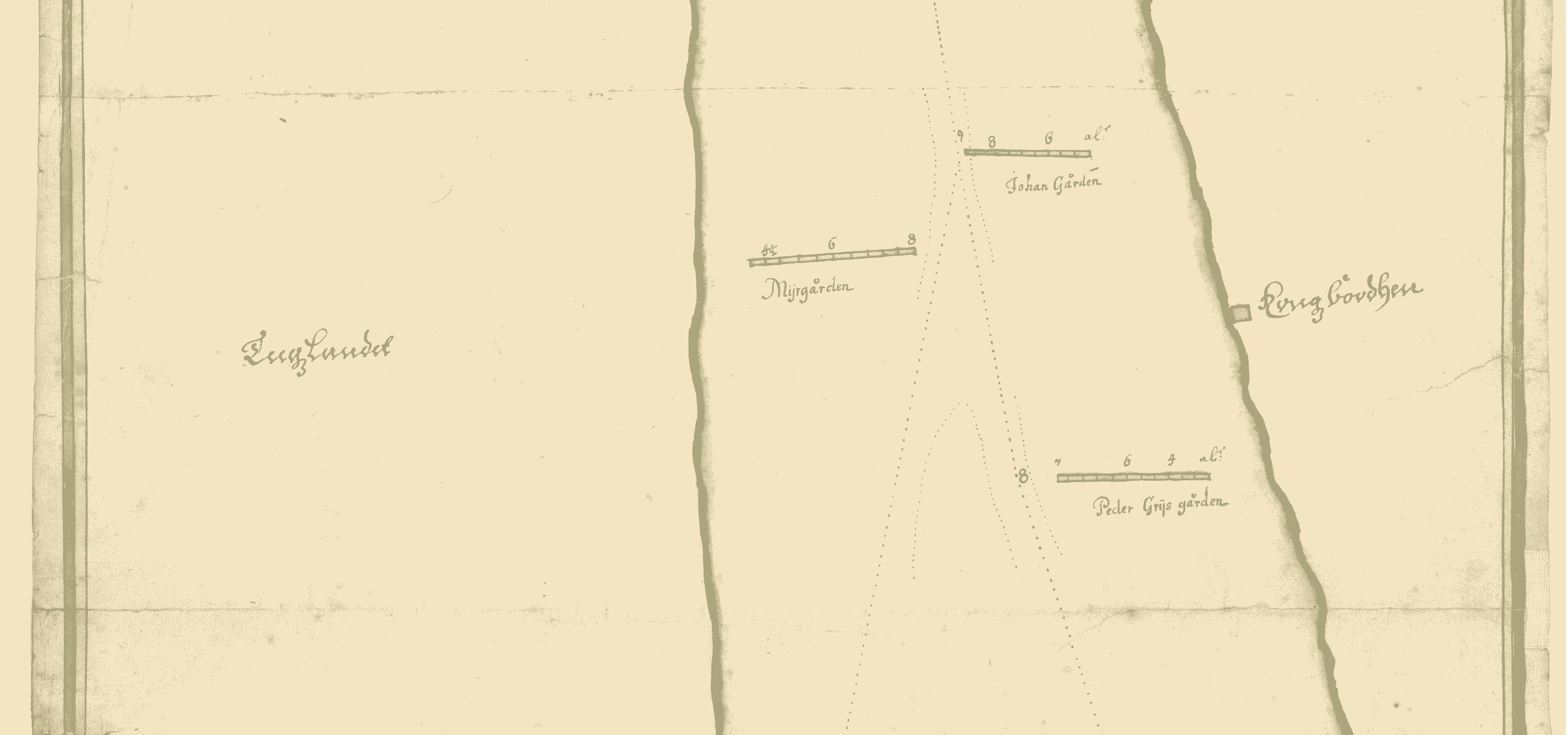
Släkten Grijs och laxgårdar
Kartan visar laxgårdarna i Umeälvens nedre del under vad som troligtvis är 1500-talets senare del. Vid två av laxgårdarna finns namnet Grijs. Den ena är mellan vad som nu är Storsandskär och Tegssidan där det står “Teegs grijs Gården”. Tjuvhällan som är utmärkt på norra sidan av älven är nära där Botniabanans bro landar i dag. Den andra är “Peder Grijs Gården” vid Kungsboden. Namnen Kungsboden och Kungsstranden antyder att det tillhör Umeå Kungsgård.
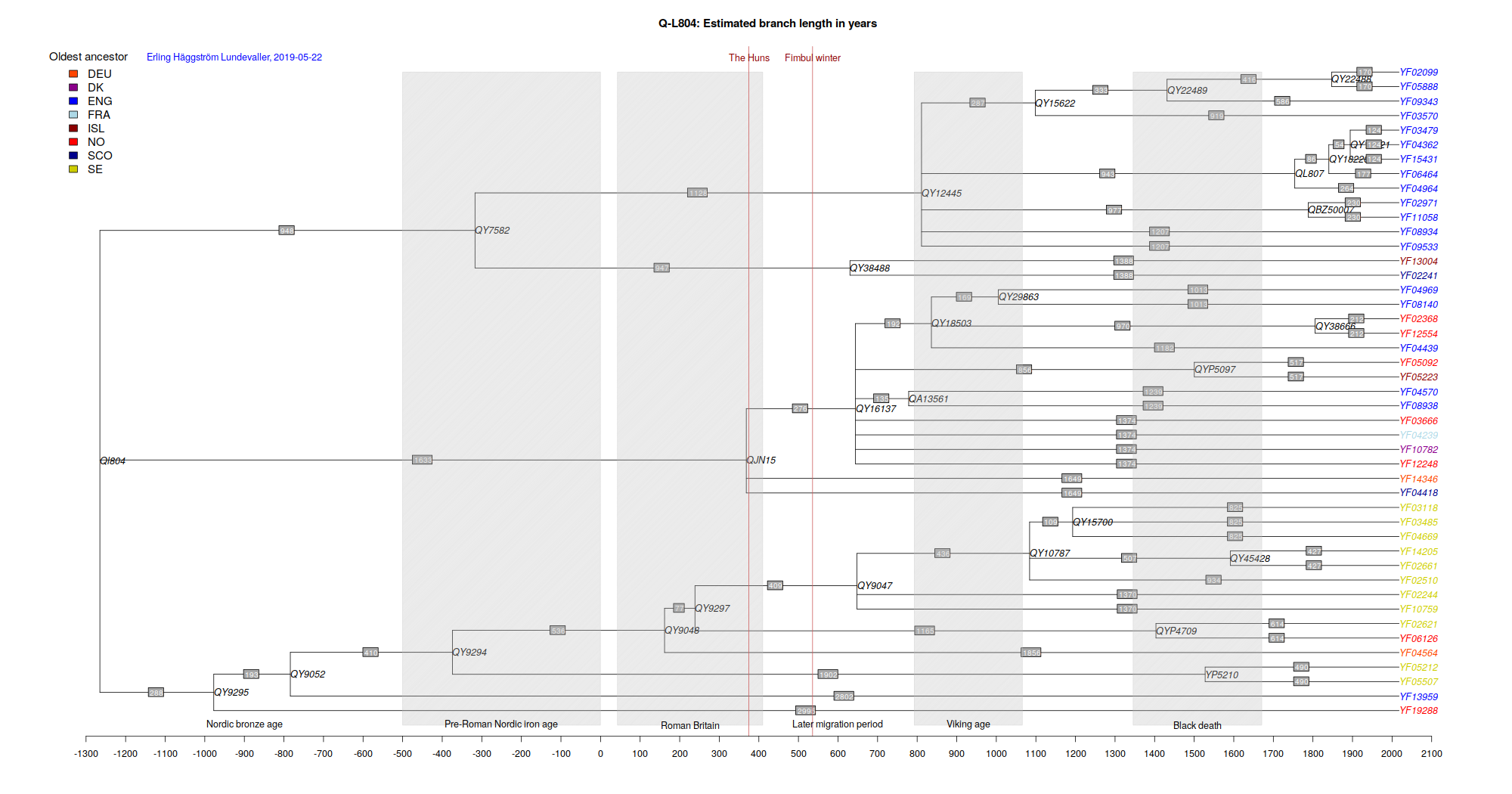
Ql804 branch dating
This is the current status of the family tree of Q-L804 based on the data at YFull. Branch length in years I have estimated with the Ape package in R using maximum likelihood and the “strikt model”. The rightmost codes refer to actuall test persons (YFxxxxx). YF02661 is a decendant of Erik Ersson in Knaften. YFulls version of the tree can be found at: https://www.yfull.com/tree/Q-L804/.
The idea of maximum likelihood here is to choose the branch lengh that gives the most likely “pedigree” given the observed number of SNPs at every branch.